2026-10-23 ·
Why Spray Foam Causes Damp Problems In South London Lofts
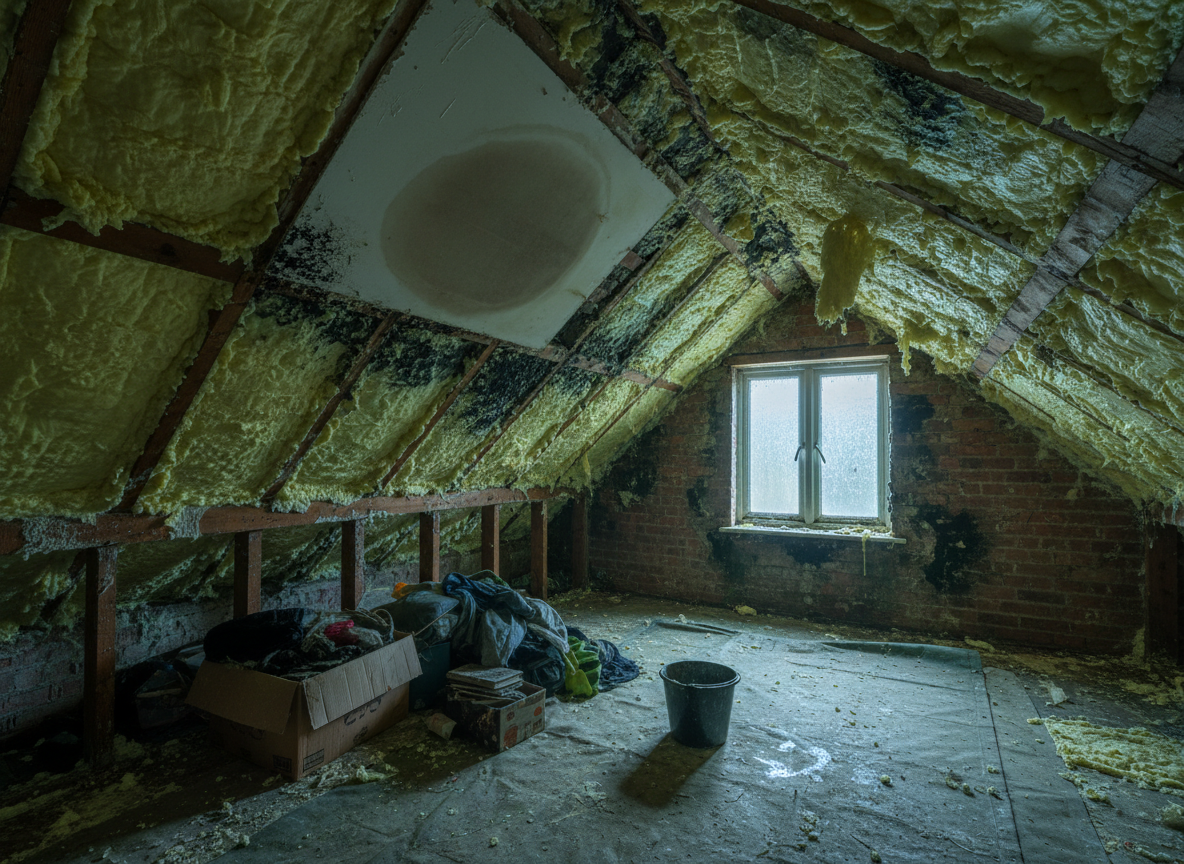
Spray foam causes damp problems in South London lofts because it creates an airtight seal that stops the roof from breathing, trapping household moisture against timbers and leading to condensation and rot in properties across Croydon.
How Closed-Cell Foam Stops Loft Ventilation
In Croydon terraces and semis built before 1970, roof voids relied on eaves and ridge vents to release warm, moist air rising from kitchens and bathrooms. Closed-cell spray foam fills every gap and adheres directly to rafters, eliminating those pathways. Once installed, any water vapour from daily living has nowhere to escape and instead condenses on the cold underside of the roof covering. Over repeated winter cycles this repeated wetting softens timber and encourages fungal growth. Homeowners in Thornton Heath and Purley report the same pattern: foam applied in the early 2010s now shows black staining along the ridge within eight to twelve years.
Condensation Patterns in Croydon Housing Stock
South London experiences frequent drizzle and high humidity, especially between October and March. In these conditions, the temperature difference between a heated living space and an unventilated loft space reaches 10–15 °C on many nights. Spray foam prevents the drying airflow that would normally remove that moisture, so droplets form on felt and battens every evening. Over time the accumulated water migrates downward, staining ceilings in bedrooms directly below. Properties in Wallington and Coulsdon with original slate roofs suffer most because the impermeable foam layer sits against a covering that already sheds water slowly.
Timber Rot and Structural Risks
Rafters and ceiling joists in Croydon lofts are typically untreated softwood installed 60–90 years ago. When moisture is held against these members by foam, decay fungi such as wet rot can reduce cross-section strength by 30 % within five years. Surveyors now flag these lofts during mortgage valuations, requiring removal before lending proceeds. The same sealed environment also degrades any original mineral wool that remains, turning it into a damp sponge that holds water against plasterboard.
Recognising Early Damp Signs
- Dark staining along the top of bedroom walls
- Musty smell strongest in the morning
- Small black spots on loft timbers visible through hatch
- Peeling wallpaper or efflorescence on chimney breasts
These indicators appear first in south-facing lofts where solar gain drives more evaporation during the day and rapid cooling at night. Checking the loft twice a year in Croydon properties helps catch the issue before joists require replacement.
Why Assessment Matters Before Any Work
An insulation assessment identifies whether the foam is open-cell or closed-cell and whether it has bonded to original lath and plaster ceilings. This step prevents unnecessary damage during later removal. Readers can also review local building regulations for spray foam removal in Croydon to understand when listed-building consent or party-wall notices apply. For homes where damp has already affected ceilings, loft spray foam removal restores airflow and allows timbers to dry before new insulation is considered.