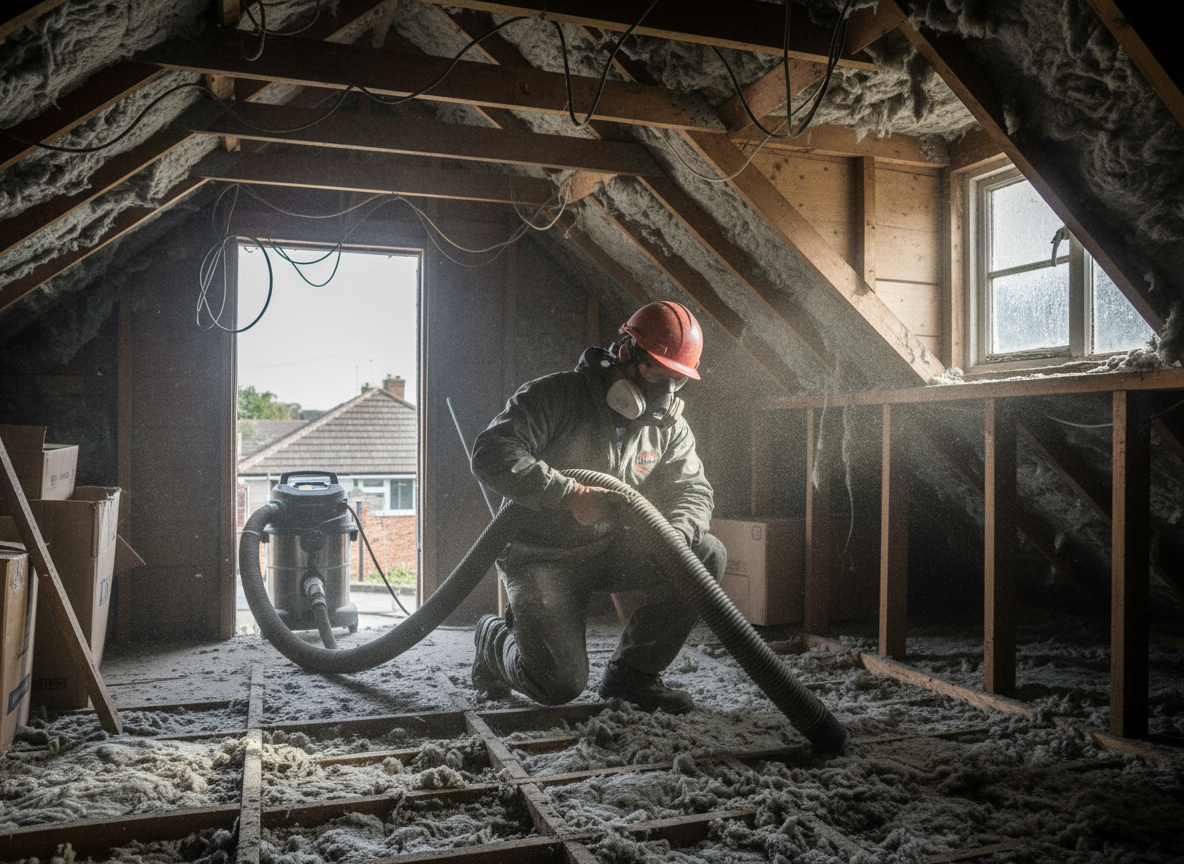
Croydon’s housing stock includes many pre-1930 terraced homes and 1950s-1970s semis where spray foam was applied directly to rafters and ceilings. Over time the foam traps moisture against timber, accelerating rot especially in north-facing roofs that receive less sun. Removal requires cutting back the foam in sections while protecting original lath and plaster ceilings below, then vacuuming residue so new insulation can be fitted without bridging.
Access in Croydon often means working through small loft hatches in narrow hallways or via scaffold on rear extensions common in South Croydon and Shirley. Foam bonded to felt or sarking boards must be peeled without tearing the underlay, otherwise new felt has to be installed at the same time. We check for hidden electrical cables and old water tanks that sit against the foam, as these are frequent in properties built before cavity wall construction became standard.
Weather in the Croydon area brings frequent winter rain and occasional high winds that can drive water under lifted tiles once foam is removed. Work is sequenced so the roof is made weathertight the same day, usually by refitting breathable membrane and insulation immediately after extraction. Homeowners on streets like Addiscombe Grove or near East Croydon station often need evening or weekend slots because daytime parking restrictions and commuter traffic limit van access.
Technician insight
In Croydon, the thing that catches most people out with insulation removal service is how often the foam was sprayed right over old water tanks and junction boxes in 1960s semis around Thornton Heath and Waddon. You have to isolate power and drain tanks before you start cutting or you end up with a much bigger job than expected.
Foam removal in a South Croydon terrace
Homeowner noticed damp patches on bedroom ceiling after heavy rain. Inspection found closed-cell foam bonded to both rafters and ceiling joists, trapping condensation. We cut and vacuumed the foam in sections, protected the lath-and-plaster ceiling, then fitted temporary breathable membrane before leaving. Loft was left clean and dry for new insulation the following week.
How it works
- 1
Site Inspection
Assess loft access, foam depth, roof condition and any hidden services from Junction Road base.
- 2
Containment Setup
Protect ceilings, electrics and stored items before cutting and vacuuming begins.
- 3
Foam Extraction
Sectional removal of spray foam, followed by thorough vacuuming of rafters and boards.
- 4
Final Clean and Handover
Remove all debris, check for remaining residue and confirm roof is ready for new insulation.
Pricing
Pricing depends on loft size, foam thickness and access difficulty; inspection required before any work.