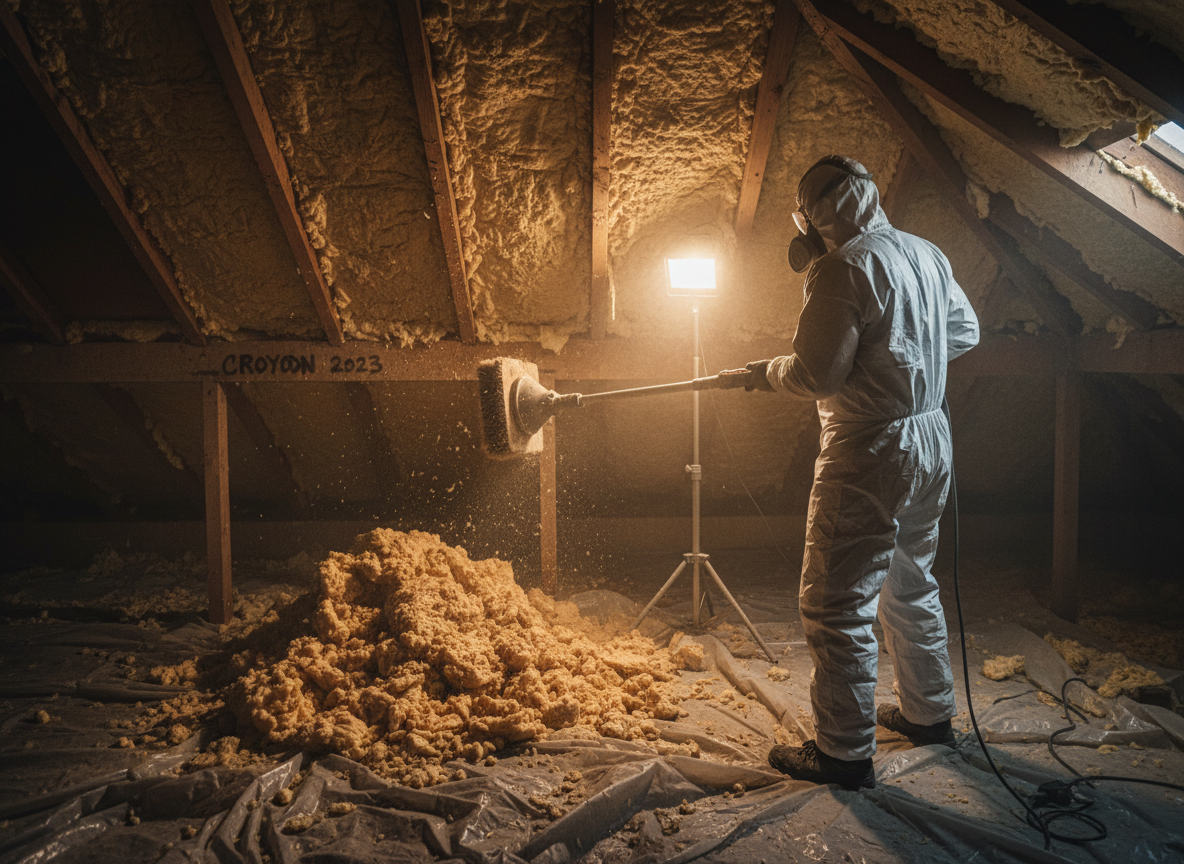
Croydon terraces and semis built before 1950 frequently received spray foam in lofts during the 1990s and 2000s. Once the foam ages it traps condensation against rafters and felt, especially during the long wet periods typical of Surrey winters. Removal requires cutting back to the original timbers, checking for rot that has already started along the eaves, and restoring airflow before any new insulation goes back in.
The work differs from newer estates because many Croydon properties have narrow access hatches and shared party walls. Foam often extends into the eaves or down the gable ends, so crews must protect ceilings below while working from Junction Road vans parked on tight residential streets. Dust and debris containment matters more here than on open sites because neighbours are close and Victorian plaster is fragile.
Disposal follows local rules for construction waste in the Croydon area. Removed foam is bagged on site and taken to authorised facilities rather than left for household collections. Homeowners see the biggest difference when the team also clears the original ventilation gaps that the foam had blocked, preventing the same problem returning within a few seasons.
Technician insight
In Croydon, the thing that catches most people out with spray foam insulation removal is how quickly rot spreads along the eaves in Victorian terraces once the foam starts breaking down during our wet winters. Homeowners often think the problem is just the insulation, but the blocked vents that the foam created are what actually keep the rafters damp for years.
South Croydon Semi Loft
Spray foam in a 1930s semi had trapped moisture along the party wall. Inspection showed saturated felt and early rot on the rafters. We removed the foam, dried and treated the timber, then reopened the eaves vents that had been sealed for over a decade.
How it works
- 1
Site Assessment
Inspect loft or wall cavities in Croydon properties to map foam depth, access points and any existing timber damage.
- 2
Containment Setup
Seal off living areas and protect ceilings before cutting begins, especially important in terraced homes with shared walls.
- 3
Foam Extraction
Remove material in sections, checking rafters and felt for moisture or rot common after years under spray foam in the local climate.
- 4
Ventilation Restoration and Clearance
Reopen eaves and ridge vents, bag all waste for proper disposal, and leave the space ready for inspection.
Pricing
Cost depends on loft size, foam thickness and access difficulty in Croydon terraces; upfront quotes given after inspection.