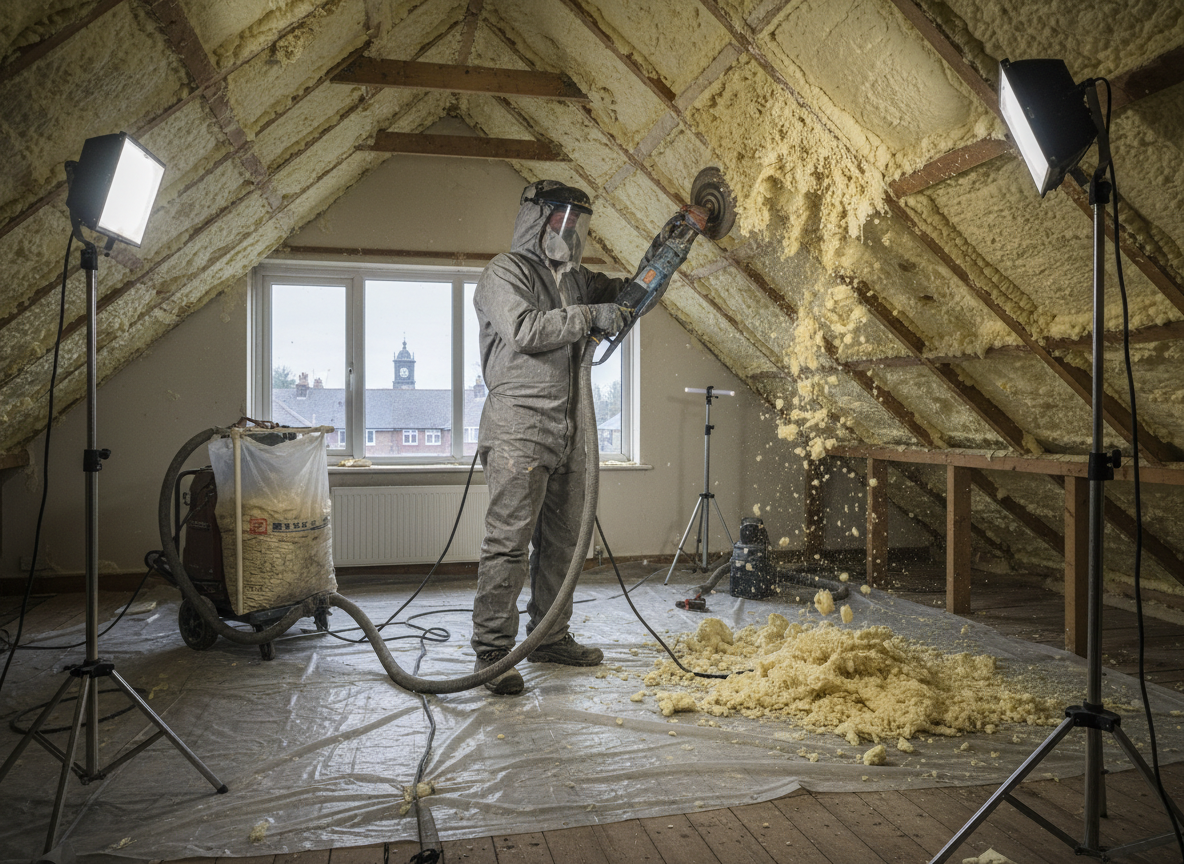
Thermal spray foam removal in Croydon often involves older Victorian and Edwardian terraces along roads like Junction Road where foam was applied directly to rafters and underfloor voids. These properties frequently suffer from poor original ventilation and later damp penetration, meaning the foam traps moisture against timber and plaster. Removal requires careful cutting and vacuum extraction to avoid disturbing asbestos-containing artex or lead paint common in pre-1960s builds, followed by drying and ventilation upgrades to prevent recurrence.
Weather patterns in the Croydon area bring frequent heavy rain and high humidity, which accelerates foam degradation and mould growth behind insulation. Homeowners in post-war semis around South Croydon and Purley often discover collapsed foam after leaks from ageing flat roofs or gutter failures. Technicians must assess substrate condition on site because attempting DIY removal risks spreading fibres and worsening damp in already saturated cavities.
UK building regulations require that any replacement insulation meets current thermal and fire standards, particularly when working near electrical cables or in shared party walls. In Croydon’s dense terrace streets, access is limited and waste disposal must follow local authority rules for construction materials. Edge cases include foam that has bonded to original lath and plaster ceilings, demanding slower manual methods to protect heritage features.
Technician insight
In Croydon, the thing that catches most people out with thermal spray foam removal is the hidden damp trapped behind foam in Victorian terraces around Junction Road and CR2. Once winter temperatures drop and heating goes on, the moisture migrates and homeowners think the foam itself is failing when the real issue is missing roof vents and blocked eaves.
Collapsed Foam in South Croydon Terrace Loft
A homeowner in a 1930s semi near Purley station noticed sagging ceiling insulation and musty smells after heavy autumn rain. Inspection revealed water had entered through failed lead flashing and soaked the spray foam, causing it to delaminate from rafters. The team extracted the saturated material, dried the timbers and recommended additional roof vents before any new insulation was installed.
How it works
- 1
Site Assessment
Inspect loft, walls and cavities in Croydon properties to identify foam type, thickness and any hidden damp or structural issues.
- 2
Containment Setup
Seal work areas to prevent fibre spread, especially important in terraced homes with shared ventilation paths.
- 3
Foam Extraction
Use mechanical cutters and HEPA vacuums to remove thermal spray foam without damaging underlying timbers or services.
- 4
Cleanup and Ventilation Check
Remove debris, treat affected surfaces and advise on improved airflow to suit local humidity conditions.
Pricing
Cost depends on property age, foam depth and access difficulty in Croydon terraces; upfront quotes provided after inspection.